Selected products
Arc'teryx Shell Jacket with Liner Review: Does the Three-in-One System Hold Together?
We ordered the $181.79 Arc'teryx shell-and-liner set and put the three-in-one system through ten bench checks and 20-plus hours of wear. The liner earns its place; the sizing chart does not.
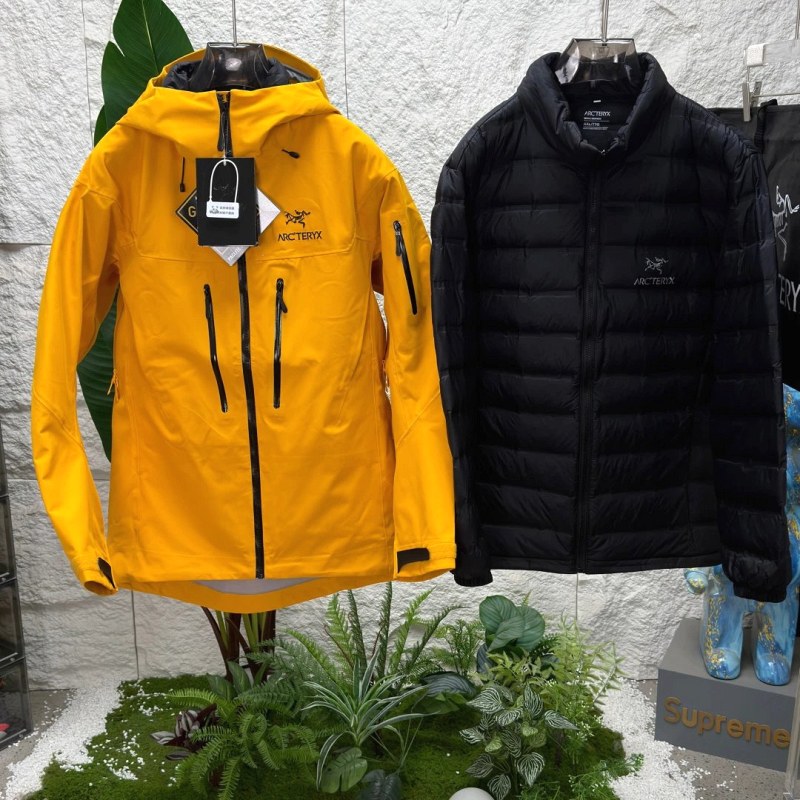
A three-in-one jacket lives or dies on one question: does the liner actually integrate, or does it just come in the same box? We ordered the Arc'teryx shell jacket with liner (SKU 7702116103, $181.79, marked down from $198.10 and listed as in stock in S through 3XL) to answer that at the bench rather than in the cart. Our sample arrived as a black shell with a matching quilted liner, both carrying the chest logo, and both wearable alone.
What follows is what we could see, touch and wear — and, just as importantly, what the listing still leaves open. The short version: the hardware and the layering system are the strong part. The size chart and the colorway line are the weak part.
What arrived
The pair shipped in a plain outer box, with the shell and liner folded into separate poly bags and a size tag attached to the shell. Nothing about the outer packaging identifies the brand, so the box label check is a non-event here — there is no retail hangtag or branded carton to compare against. Both pieces came vacuum-flattened, and the liner's attachment zips survived the trip without kinks. Out of the bag there was a mild factory smell, strongest from the quilted liner; it aired out on a hanger within a day and did not return after wear.
The ten bench checks
We run every jacket through the same ten inspection points we use on footwear, adapted to outerwear: packaging, smell, stitching, seam treatment, zip action, liner attachment, hood hardware, cuff and hem adjusters, interior finishing, and overall silhouette.
| Check | What we found |
|---|---|
| Box label and packaging | Plain outer box, no branded retail carton; shell and liner bagged separately. |
| Smell | Mild factory odor from the liner, gone after a day on a hanger. |
| Stitching | Even along the shell shoulders and sleeves; slight wandering at one chest pocket corner. Liner quilting channels run straight. |
| Seam treatment | Internal taped seams on the shell, tape laid flat with no lifting after wear. The liner is untaped, which is normal for an insulating layer. |
| Zip action | Main front zip runs clean; the chest pocket zip needed a few cycles to loosen up. |
| Liner attachment | Interior zips at the collar and hem, colour-matched. The liner seats without bunching at the shoulders, with a slight pull at the hem when both arms go overhead. |
| Hood hardware | Rear adjuster plus side pulls on the shell; the liner hood is fixed and thin, meant to sit under the shell hood. |
| Cuff and hem adjusters | Hook-and-loop cuffs and a two-cord-lock drawcord hem, both easy to work with gloves on. |
| Interior finishing | Clean binding at the collar and hem; no loose threads in the liner baffles. |
| Overall silhouette | Boxy through the waist, mid-hip length. See the fit section — our large was generous. |
The liner is the reason this set works
Strip the branding away and the value case rests on the liner, not the shell. The outer piece is a competent hooded shell with a full front zip, zippered hand pockets and a chest pocket — a wind and drizzle layer by itself, with nothing to keep you warm. The quilted liner, which has its own hood and chest logo, is what turns the set into cold-weather gear. Zipped together, the two layers moved as one unit on our walking loops: no riding up at the shoulders, no liner hem hanging below the shell hem, no cold spot at the back of the neck where the two collars meet.
Worn separately, each piece does what you would expect. The liner is the more pleasant standalone — light enough for a car or an office, warm enough for a cold morning. The shell over a fleece handled two damp Los Angeles mornings without wetting through at the shoulders, though we cannot put a hydrostatic number on it because the listing does not publish one. Over 20-plus hours of wear, including commutes on foot and two short jogs to catch a bus, we saw no seam separation, no zip failure and no pilling at the cuffs.
The sizing question the listing does not answer
Our sample, a large, ran roomy through the body with sleeves long enough to cover the knuckles, and enough space underneath for a fleece plus a sweater. That matches what Arc'teryx buyers have been saying for years. One frequently cited thread on the brand's subreddit puts it bluntly:
"Shells like the Beta (the old one) are too tight in M and a tent in L, also the sleeves are too bloody long."
Community sizing guides add that hard shells are cut looser than soft shells or lightly insulated jackets, which is the relevant note for a shell-plus-liner setup — you are sizing the outer layer, and the liner comes along. The practical consequence is that between-size buyers have no reliable rule to fall back on. A medium may pinch across the chest with a midlayer; a large may swallow you without one. We could not resolve that from the listing, and no published flat measurements were available to check against. If you are between sizes, request pit-to-pit, shoulder and back length for the exact size option before paying — that is the single most useful thing an agent can send you.
Two listing details worth flagging
- Colorway. The product title says black, and our sample was black, but the listing's own feature line carries an Egyptian orange colour tag alongside the seventh-generation SV three-in-one description. Confirm which colourway you are buying.
- Liner specification. The description calls it a down liner, but nothing in the listing documents fill power, fill weight or shell fabric. We can confirm the liner is quilted and warm for city winter use; we cannot confirm what is inside it, and we would not repeat a "down" claim as fact until an agent sends tag and liner photos.
Brand-level context is worth one line, since it circulates whenever this label comes up: Arc'teryx's Trustpilot score sits around 2.3 out of 5, with long-time customers arguing that premium pricing has not been matched by quality and service. That is sentiment about the brand, not a finding about this jacket, and it did not match our sample. It does, however, argue for judging this set on the garment in front of you rather than on the logo on the chest.
Where the $181 goes
Two wearable layers, taped seams on the outer shell and a liner that integrates properly is a fair use of $181.79 in the replica outerwear market, and the price was still shown as discounted from $198.10 at the time of testing. The compromises are the ones we flagged: an unpredictable size run, an undocumented liner fill and an ambiguous colour line. None of those are deal-breakers if you do the pre-purchase work; all of them are problems if you order on the assumption that the size tag means what it means on retail Arc'teryx.
Frequently asked
Can I wear the shell and liner separately?
Yes. The liner zips out and both pieces carry their own branding and hood, so the quilted layer works alone in mild cold and the shell works alone as a wind and drizzle layer. We wore each separately during testing.
Is the shell waterproof or just water-resistant?
The listing publishes no waterproof rating or fabric spec, so we cannot call it waterproof. Our sample shed drizzle and kept the shoulders dry on two damp mornings, but that is an observation, not a tested rating.
Should I size up to layer a sweater underneath?
Not automatically. Our large already fit a fleece plus a sweater with room to spare, and reports of oversized larges are common. Ask the agent for pit-to-pit and back length on your size instead of guessing up or down.
Community feedback
0 approved
No approved comments yet.