Valentino Belt QC: Leather, Holes, and Hardware
- Editorial notes
The core of this QC check isn't to first decide if it's 'good', but to confirm whether the QC photos actually correspond to the target item, and whether the details in the photos are sufficient to support ordering, requesting additional photos, returning or exchanging, or stopping the process. The currently provided evidence page actually corresponds to a pair of [Valentino](https://fashion-reps.net/brand/valentino) black leather flat slides, not a belt, so this set of photos cannot be used as e
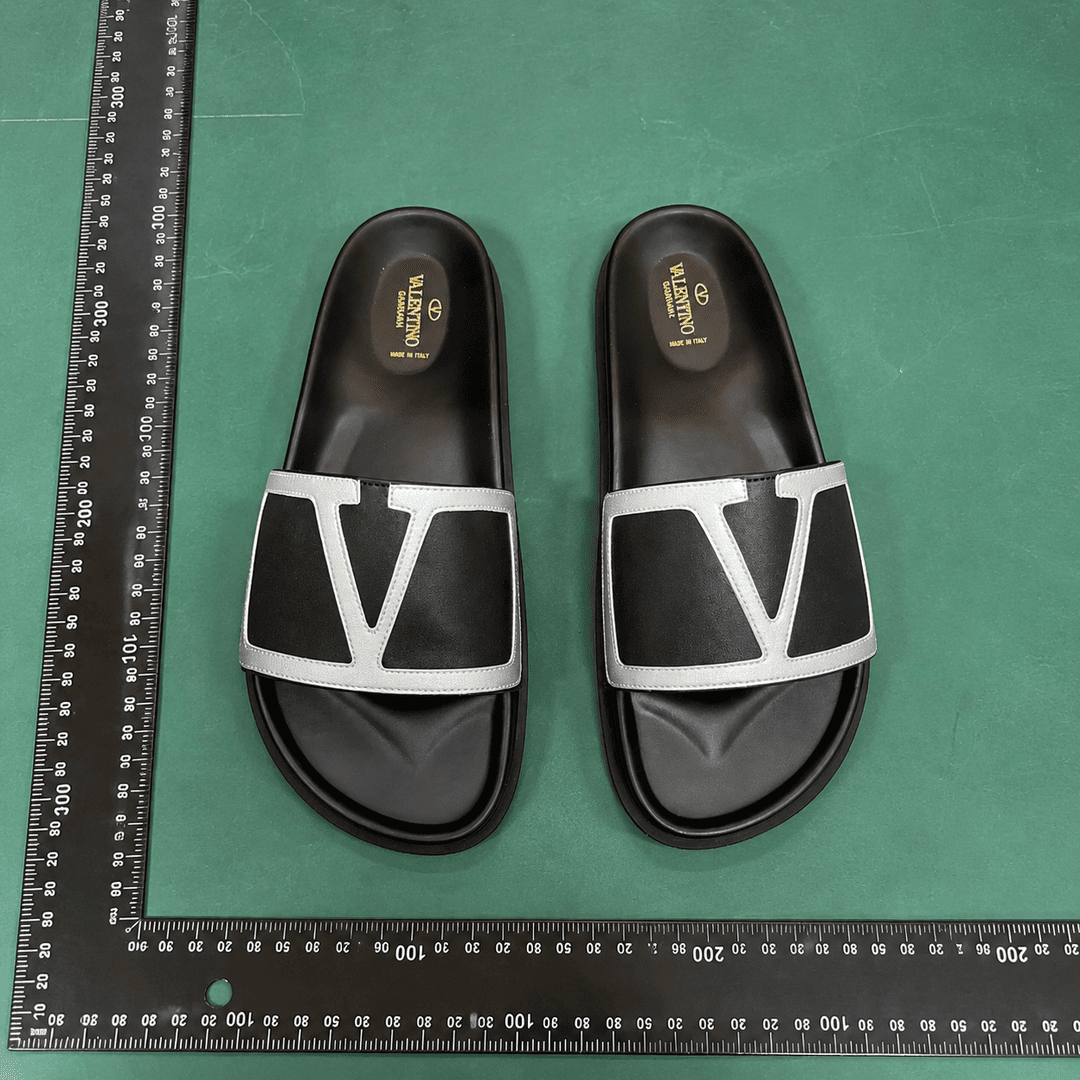
The core of this QC check isn't to first decide if it's 'good', but to confirm whether the QC photos actually correspond to the target item, and whether the details in the photos are sufficient to support ordering, requesting additional photos, returning or exchanging, or stopping the process. The currently provided evidence page actually corresponds to a pair of Valentino black leather flat slides, not a belt, so this set of photos cannot be used as evidence of the belt's leather surface, hole positions, or buckle.⚠️
Scope of This Valentino Belt QC Check
Belt QC should verify six categories of information for the same item: style, color, size or length, leather surface and edges, holes and stitching, and hardware and connections. Each item needs to establish a clear relationship between the product detail page and the corresponding QC photos.
The evidence page provided shows Valentino black leather flat slides, with the page description including black, leather upper, metal logo, and rubber outsole. The size record also has two versions: 38–45 and 39–45. It can indicate that the page has a QC entry and item-level photo records, but it cannot prove any belt details, nor can it be used to determine the authenticity or durability of a belt.
First Confirm the Style, Color, Size, and Specifications on the Product Detail Page
When formally checking a belt, first record the following on the detail page:
- Whether the product name clearly states 'belt', not shoes, bags, or other accessories
- Whether the style name, color, and logo position match the order target
- Belt length, width, size range, or adjustable range
- Page claims about leather or other materials
- Buckle color, shape, surface treatment, and fastening method
- Whether the page contains contradictory specification information
If the detail page lists multiple different values for belt length, or the product name doesn't match the image category, you should confirm with the seller first, and not infer the actual shipping specifications based solely on one photo. Size records are page facts and cannot be replaced by editorial observation.
Enter the Corresponding Product's QC Photo Gallery via View QC Photos
The correct process is to first open the target product detail page, then use the entry named View QC Photos on the page to access that product's QC photo gallery. Do not guess or piece together a QC URL, and do not infer the target item's condition from the homepage, brand page, category page, or other product images.
After entering the photo gallery, first verify the identity:
- Is the item category in the photos a belt.
- Do the color, buckle, and logo match the detail page.
- Do the photos show the same item, not related styles or items from the same collection.
- Can you see the complete belt body, buckle, holes, and edges.
- Is there an order number, size tag, or other correlatable information.
The provided photos should only be used as QC evidence for footwear. They cannot support a belt check conclusion, so the belt item should remain pending verification when corresponding photos are missing.🧾

Caption: The provided QC photos actually show Valentino black leather flat slides, including metal logo and rubber outsole; the photos do not match the belt target and are only used to illustrate the importance of item identity verification.
What Visible Details Should Be Recorded for Leather Surface, Edge Finishing, and Stitching
Once the corresponding belt QC photos are available, the leather surface check should record visible facts, not use adjectives like 'premium' or 'perfect' that cannot be verified. It is recommended to observe in the following order:
- Whether there are obvious scratches, indentations, creases, bubbles, color differences, or irregular reflections on the leather surface
- Whether the edge paint is continuous, and whether there are cracks, glue overflow, rough edges, or partial gaps
- Whether the colors on both sides of the belt are consistent, and whether there is abnormal discoloration at bending positions
- Whether the stitch spacing is roughly uniform, and whether there are exposed thread ends, skipped stitches, or insufficient backstitching
- Whether the logo embossing or print edges are clear, and whether there are misalignments, double images, or obvious abrasions
Photos can only prove the visible surface condition within the shooting range, and cannot prove leather feel, internal layers, long-term durability, or authenticity. If a certain edge is not photographed, it should be recorded as 'no evidence seen', not assumed to be flawless.
How to Compare Hole Positions, Length, and Buckle Position with Page Specifications
Belt hole checking should simultaneously look at quantity, spacing, alignment, and hole edge condition. The focus is not whether the holes look neat, but whether they correspond to the length and adjustable range stated on the page.
| Check Item | Visible Evidence | What Needs to Be Confirmed |
|---|---|---|
| Hole arrangement | Number of holes, spacing, and whether they are in a straight line | Whether actual hole spacing matches page specifications |
| Length | Ruler, tape measure, or scale reference | Measurement start and end points, and whether buckle is included |
| Buckle position | Buckle shape, color, connection part | Whether buckle closes normally and connection is secure |
| Edge condition | Whether hole edges have cracks, rough edges, or crush damage | Whether they may expand after use |
If the photos do not have a ruler or clear reference object, do not estimate centimeters from image proportions. The seller should provide the actual length for the target size, preferably specifying the measurement method from the buckle connection to the middle hole, shortest hole, and longest hole.📏
How to Build a Checklist for Hardware Surface, Connections, and Missing Photos
Hardware should be recorded separately; do not skip the buckle check just because the leather surface looks normal. Visible items include:
- Whether the buckle surface has obvious scratches, color fading, oxidation spots, or edge dents
- Whether logos or decorative parts are centered, and whether there is misalignment, looseness, or missing parts
- Whether the prong, loop, screws, or rivet connections are intact
- Whether the connection between the belt and hardware has obvious cracking, glue separation, or stitching abnormalities
- Whether the back, bottom, and corners are clearly photographed
If a set of QC photos only captures the front, it is impossible to judge the back, hole interiors, and buckle connection. In that case, mark it as 'missing photos' in the checklist, and do not write 'no problems seen' as 'no problems'.
Additionally, the public durability records on this evidence page relate to another Valentino Garavani item and cannot be extrapolated to the target belt. Different styles, different structures, and different usage conditions cannot be directly substituted for each other.
How to Request Additional Photos When Evidence Is Insufficient Instead of Jumping to Conclusions
When belt photos do not match the target item, or key parts are missing, you can make specific requests for additional photos to the seller:
- Please photograph the entire belt front and back, ensuring the buckle and all holes are in frame
- Please photograph the buckle front, back, side, and connection to the belt
- Please use a ruler to measure total length, width, and hole spacing, and indicate measurement start and end points
- Please take close-up photos of leather scratches, edge paint, stitching, and logo embossing
- Please confirm that the photos correspond to the color, size, and actual order item
Try to list all missing evidence at once to avoid repeated back-and-forth. Do not ask the seller to provide or make public unrelated order numbers, payment information, complete shipping labels, or personal information.🔍
Post-QC Decision for Valentino Belt and Conditions for Stopping
If after additional photos you can confirm that the photos correspond to the target belt, and the length, color, holes, buckle, and main surface details match the page specifications, you can proceed to the next step of purchasing or warehouse processing. But this is still only a check based on visible evidence, not a guarantee of authenticity or long-term quality.
If only partial close-ups are missing, pause the decision and request additional photos. If the item category consistently does not match the target, key specifications contradict each other, the buckle connection cannot be clearly seen, or the seller refuses to provide basic size evidence, it is not recommended to continue ordering or confirming shipment based on current information.
The result of this check should be recorded as: the provided QC photos can be identified as Valentino black leather flat slides, but do not match the target belt; the belt's leather surface, hole positions, length, and hardware condition have not yet obtained sufficient item-level evidence. Therefore, the safest action is to stop the belt QC conclusion, return to the target belt detail page, re-enter the corresponding View QC Photos, and complete the item-by-item check.
Editor score 4.2 / 5
Community feedback
0 approved
No approved comments yet.